
When building a product, it’s easy to guess what users want. However, that often leads to wasted time and effort. This is why in this article I explained how I used User-Centered Design (UCD) to create a travel platform that actually solves real problems for travelers. My goal is to help travelers discover hidden places with useful recommendations and real-time advice. To do this, I ran a survey to learn directly from travelers.
In this post, I’ll share the questions I asked to understand travelers’ needs, the insights I discovered from their answers, the features I designed to solve real problems, and what’s next for my project.
Step 1: Asking the Right Questions
Before designing anything, I needed to understand how people plan their trips, the problems they face when looking for travel information, and what features would improve their experience.
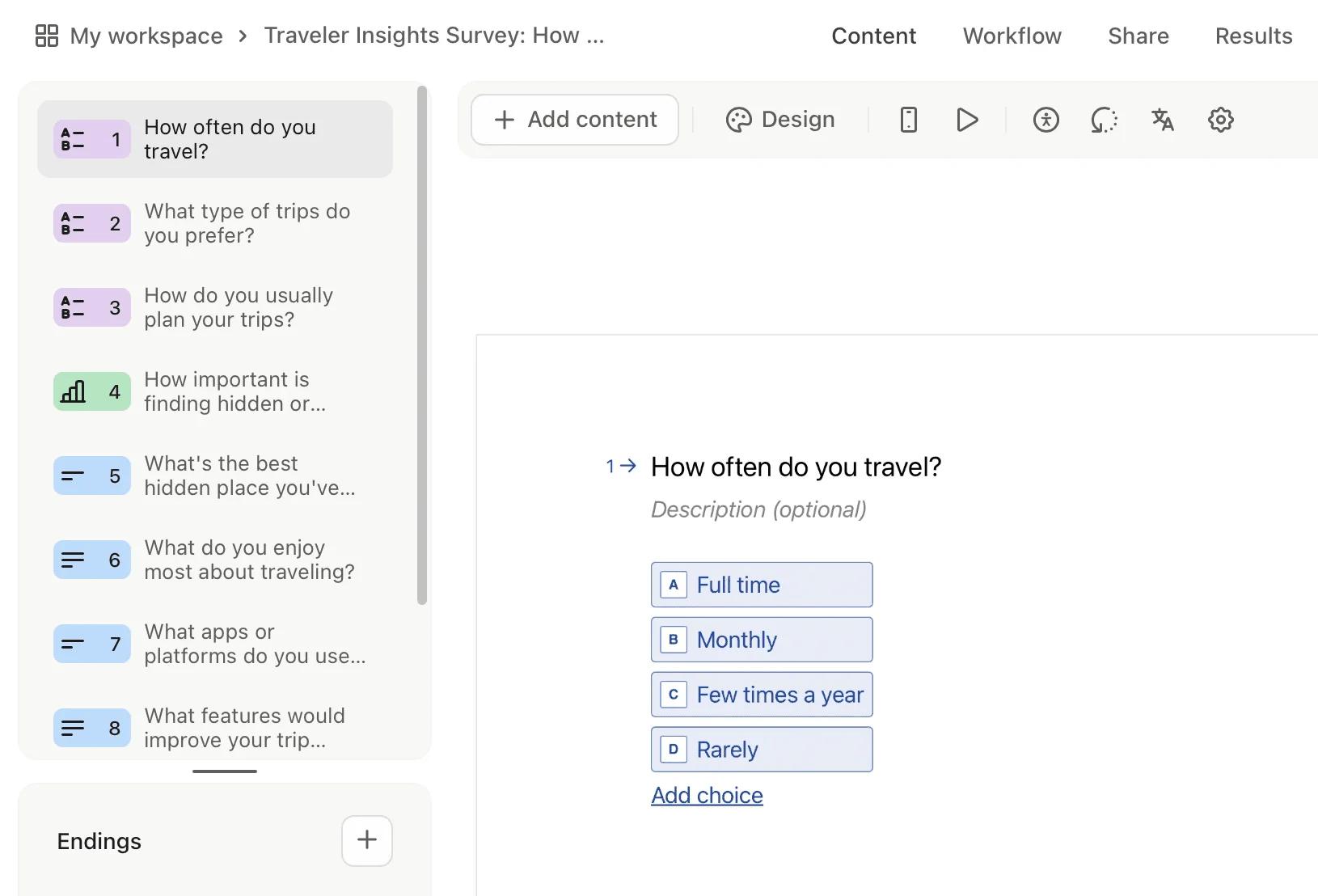
So, I created a survey using Typeform and asked these key questions:
1. How often do you travel? - This helped me understand how engaged my audience is with travel.
2. What type of trips do you prefer? - I gave people multiple choices, like:
- Adventure (hiking, trekking, extreme sports)
- Relaxation (beaches, resorts, wellness retreats)
- Cultural (museums, historical sites, local traditions)
- Backpacking (budget-friendly, long-term, multiple destinations)
- Gastronomic (food tours, local cuisine experiences)
- Nature & Eco-Tourism (wildlife, sustainable travel)
- Party & Nightlife (festivals, clubs, social events)
- Road Trips (exploring by car, campervan, or motorcycle)
- Staycation (exploring your own city or nearby places)
3. How do you usually plan your trips?
- People could choose multiple answers, including:
- Travel blogs and websites
- Recommendations from friends and family
- Social media (Instagram, TikTok, Facebook groups)
- Travel apps (Google Maps, TripAdvisor, Airbnb Experiences)
- Guidebooks and printed travel guides
- Online forums and communities (Reddit, Lonely Planet)
- Travel agencies and tour operators
- Spontaneous (no planning at all)
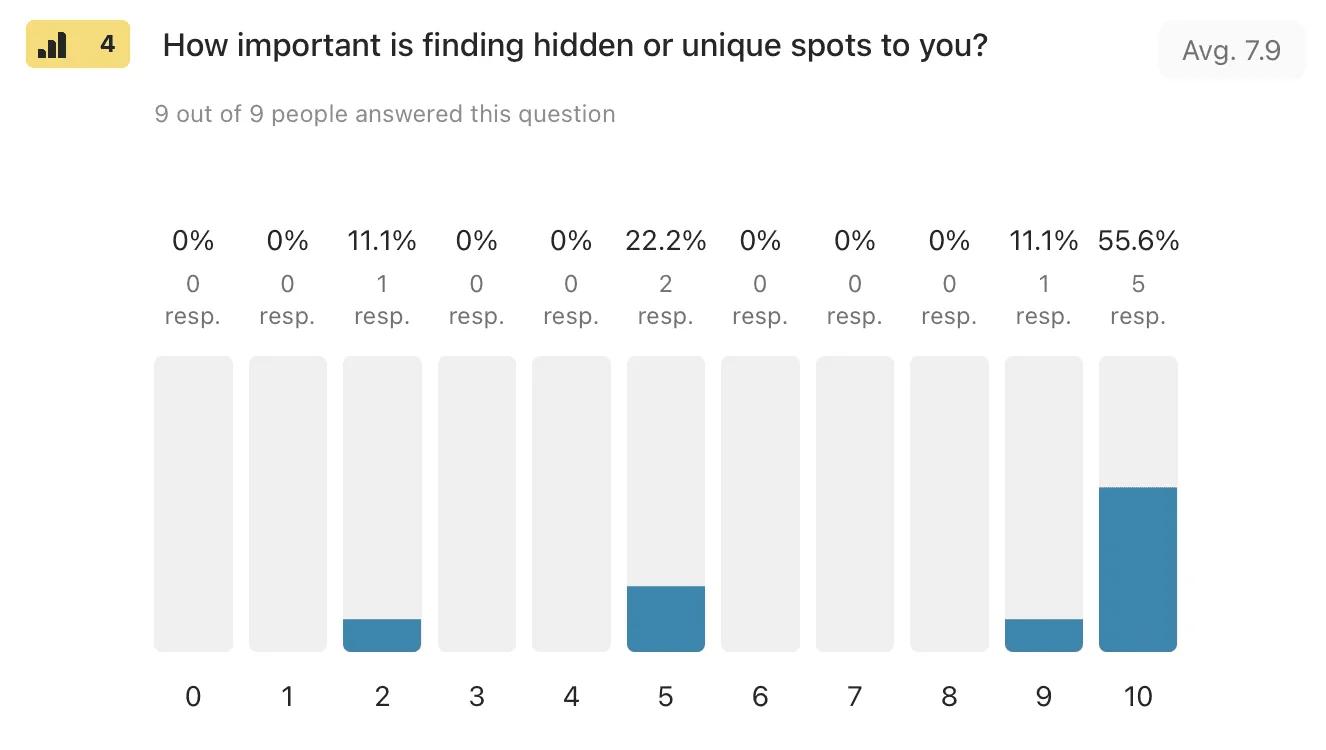
4. How important is finding hidden or unique spots to you? (Scale 1-10) - I wanted to see if people cared about discovering lesser-known places.
5. What’s the best hidden place you’ve discovered? - This helped me find examples of unique locations travelers love.
6. What do you enjoy most about traveling? - I wanted to know what makes travel exciting for them.
7. What apps or platforms do you use for travel planning? - This showed me what tools people already trust and more importantly, what features people use for when planning a trip.
8. What features would improve your trip planning experience? - I wanted people to tell me what they felt was missing.
9. What frustrates you the most when searching for travel information? - This helped me understand the biggest pain points.
10. What’s missing in current travel platforms? - This revealed what people wish existed.
Step 2: What I Learned from the Survey Results
I collected responses and analyzed the data. Here’s what I found:
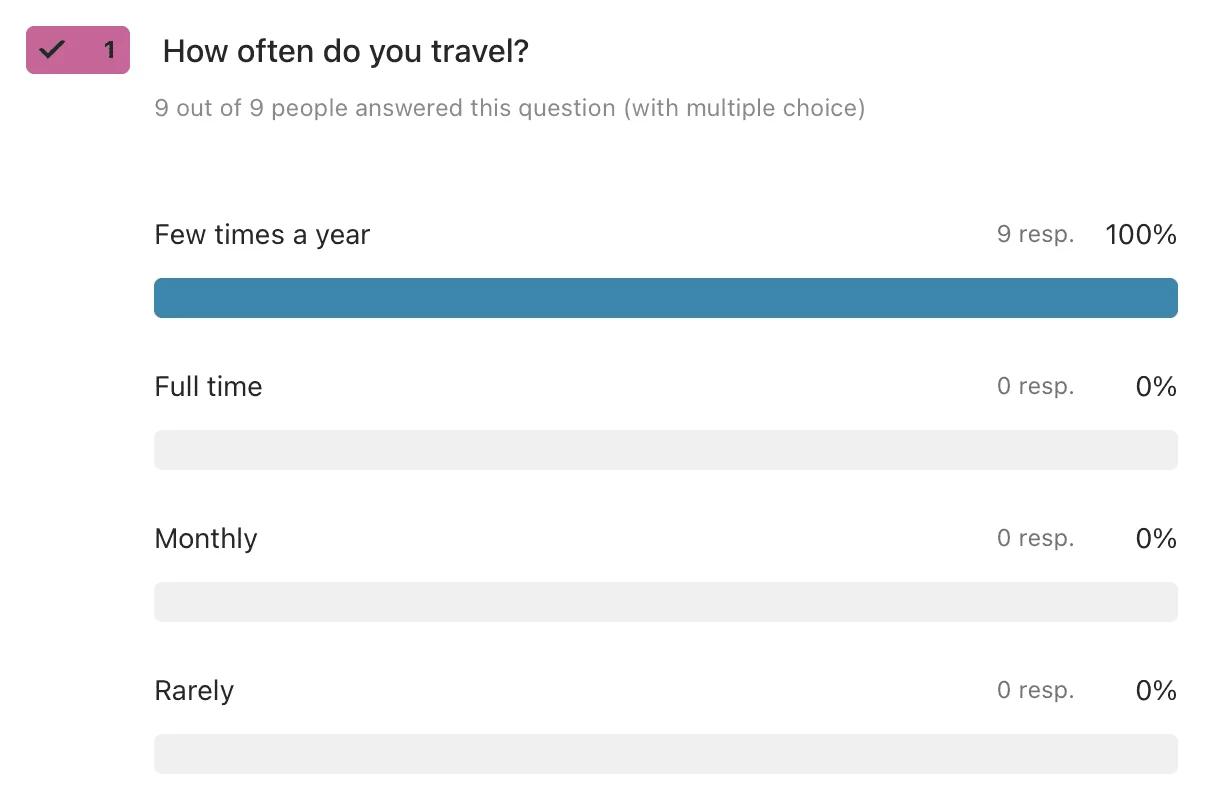
1. Travel Frequency
Most travelers in the survey travel a few times a year. This means they are not full-time travelers but still travel often enough to care about better planning tools.
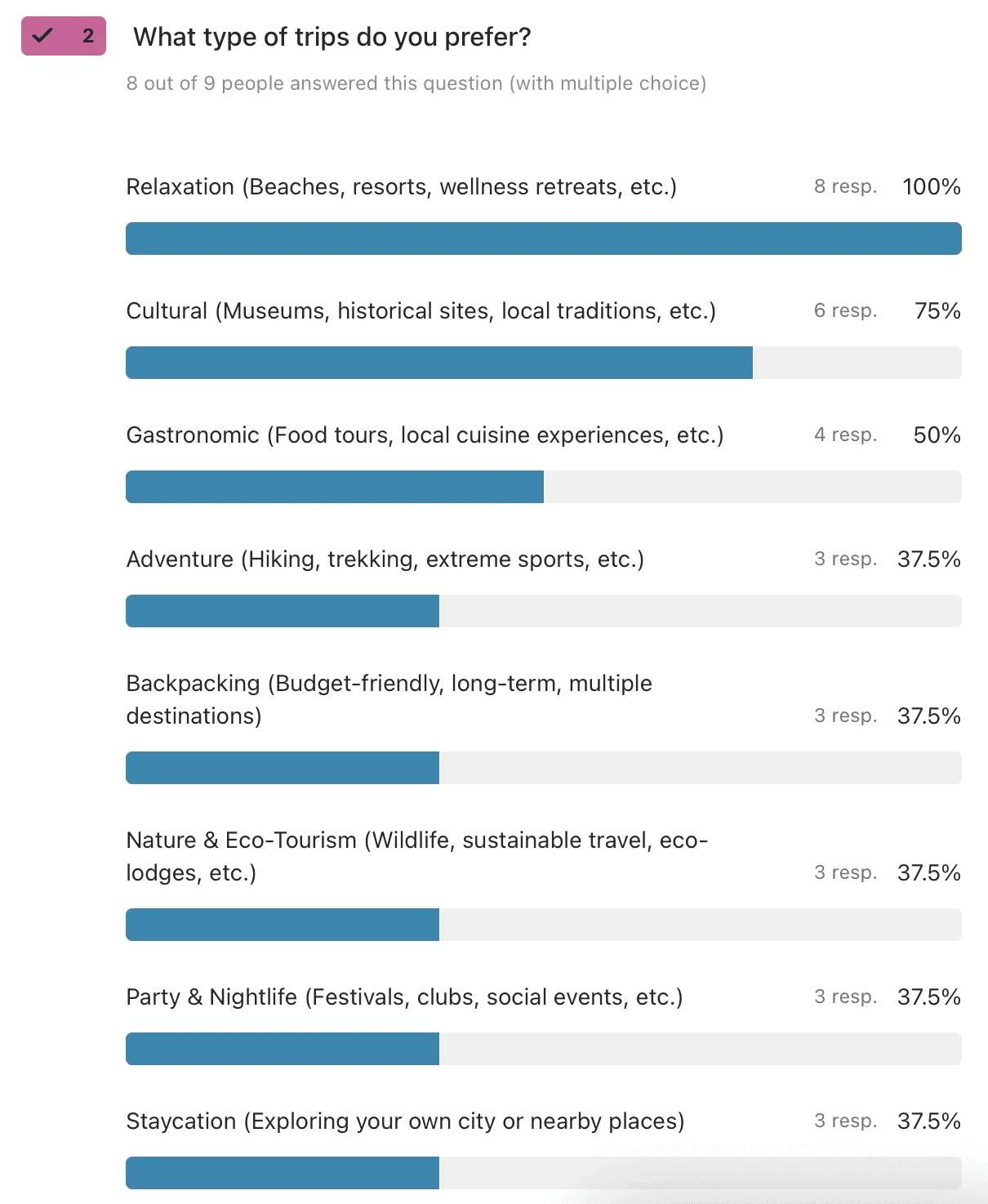
2. Popular Travel Styles
- Many prefer Relaxation (beaches, resorts, wellness retreats) and Cultural trips (museums, historical sites, local traditions).
- Backpacking, Gastronomic travel, and Eco-Tourism were also common choices.
- Some mix multiple styles (e.g., Adventure + Relaxation + Cultural).
3. How People Plan Their Trips
Most-used methods:
- Travel apps (Google Maps, TripAdvisor, Airbnb Experiences).
- Recommendations from friends & family.
- Social media (Instagram, TikTok, Facebook groups).
- Least-used method: Travel agencies and tour operators.
4. Importance of Hidden Places
The average score was 7.9/10, meaning many travelers love discovering unique places. This enforces the needs of creating a travel app or website that focuses on unique experiences.
5. Most Used Travel Apps
- Most common: Google Maps, Booking, Airbnb.
- Surprise mentions: Grindr 😱 (for social connections while traveling), ChatGPT (for recommendations).
6. Biggest Frustrations When Planning Trips
- Lack of up-to-date or complete information.
- Too many touristy places, not enough hidden gems.
- Security concerns when exploring lesser-known spots.
- Limited options for solo travelers.
7. What’s Missing in Current Travel Platforms?
- More interactive and real-time travel advice.
- Better filters & ways to display accommodations.
- Local contacts to help tourists in each area.
- A platform that allows deeper conversations, not just reviews.
Step 3: Features Inspired by Real User Needs
Using these insights, I designed features to solve the problems travelers face:
1. Hidden Gems Map
- A map of lesser-known places, recommended by travelers.
- Filters to find food spots, nature, culture, and adventure.
2. Smart Trip Planner
- Personalized itineraries based on budget, interests, and travel style.
- Budget tracker to help stay within spending limits.
3. Real-Time Travel Community
- Chat groups for solo travelers, local recommendations, and meetups.
- Travelers can ask locals for real-time advice.
4. AI-Powered Travel Assistant
- Instant travel questions answered with AI.
- Translation & cultural tips for smoother travel.
Final Thoughts
Using User-Centered Design (UCD) helped me move from assumptions to real insights, allowing me to create a travel platform that truly solves problems for travelers. By conducting surveys, analyzing responses, and identifying key frustrations, I was able to design features that focus on hidden travel spots, real-time advice, and smart trip planning.
This process showed me that the best products come from listening to users first. Instead of guessing what people want, I built a solution based on real needs and pain points. Now, the next steps are to test the design, gather feedback, and refine the experience before launching.